
Top 5 Emerging Trends in Sales Distribution Channels You Need to Know

The way businesses sell and deliver products is changing rapidly, making sales distribution channels more important than ever. Driven by digital transformation, evolving customer expectations, and advancements in technology, companies must continuously adapt their distribution strategies to remain competitive. Whether through traditional retail networks, direct-to-consumer (DTC) models, e-commerce platforms, or omnichannel distribution, selecting the right sales channels plays a vital role in expanding market reach and improving customer satisfaction.
In this guide, we'll explore the fundamentals of sales distribution channels, the different types available, the top emerging trends shaping the industry, common challenges businesses face, and how modern technologies like Field Sales Automation are helping organizations optimize their distribution networks for long-term success.
What are Sales Distribution Channels?
Sales Distribution Channels are the pathways through which products move from manufacturers to the final customers. These channels include the people, businesses, and processes involved in delivering products efficiently, such as distributors, wholesalers, retailers, e-commerce platforms, and direct sales teams. Choosing the right distribution channel helps businesses ensure product availability, improve customer satisfaction, and maximize sales performance.
Depending on the business model, companies may use direct distribution channels, where products are sold directly to customers, or indirect distribution channels, where intermediaries such as distributors and retailers handle product distribution. Many businesses today also adopt omnichannel strategies to reach customers across both online and offline platforms.
Effective sales distribution channels play a critical role in expanding market reach, reducing operational costs, improving inventory management, and creating a seamless customer buying experience. As consumer behavior evolves, businesses must continuously optimize their distribution strategies to stay competitive and meet changing market demands.
Why Sales Distribution Channels Matter
Selecting the right sales distribution channels is essential for business success because it directly impacts product availability, customer experience, operational efficiency, and overall profitability. An effective distribution strategy ensures that products reach the right customers at the right time while minimizing costs and maximizing revenue.
Modern businesses often rely on multiple distribution channels to increase market coverage, improve customer convenience, and respond quickly to changing consumer preferences. By combining traditional retail networks with digital platforms, companies can build a stronger market presence and gain a competitive advantage.
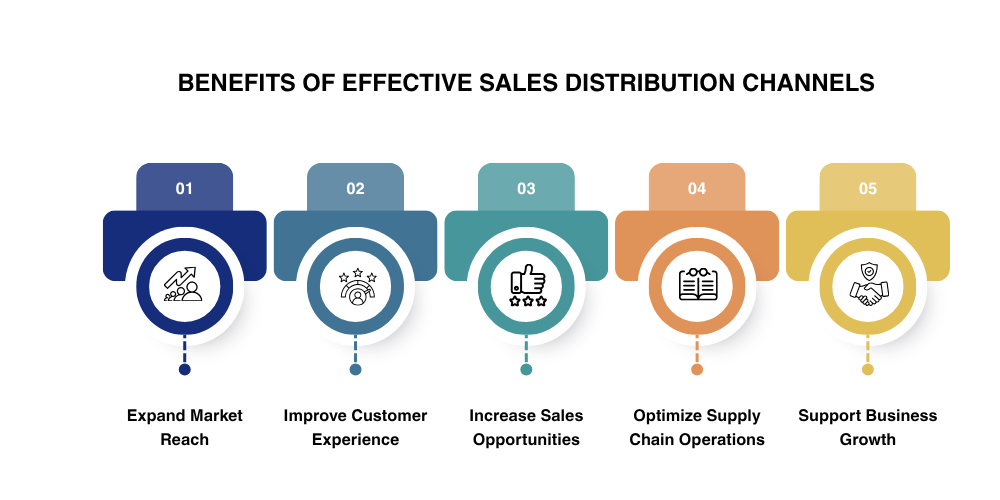
Benefits of Effective Sales Distribution Channels
-
Expand Market Reach: Enable businesses to serve customers across multiple regions through retailers, distributors, wholesalers, and online marketplaces.
-
Improve Customer Experience: Ensure products are readily available across preferred purchasing channels, increasing customer satisfaction and loyalty.
-
Increase Sales Opportunities: Multiple sales channels create more touchpoints with customers, helping businesses generate higher sales and revenue.
-
Optimize Supply Chain Operations: Efficient distribution management improves inventory flow, reduces delivery delays, and lowers operational costs.
-
Support Business Growth: Well-planned distribution strategies help companies enter new markets, scale operations, and strengthen their competitive position.
Types of Sales Distribution Channels
Businesses use different sales distribution channels depending on their products, target customers, and market strategy. Selecting the right distribution model helps improve efficiency, reduce costs, and maximize market penetration.
Direct Distribution
In a direct distribution channel, manufacturers sell products directly to customers through company-owned stores, websites, or field sales teams. This approach provides greater control over pricing, branding, and customer relationships while eliminating intermediary costs.
Indirect Distribution
An indirect distribution channel involves intermediaries such as wholesalers, distributors, dealers, and retailers who help move products from manufacturers to end consumers. This model enables businesses to expand market reach quickly without investing heavily in their own distribution infrastructure.
Dual Distribution
A dual distribution strategy combines both direct and indirect channels. Companies sell products directly to customers while also partnering with distributors and retailers to maximize market coverage and reach different customer segments.
-1786945153.png)
Omnichannel Distribution
Omnichannel distribution integrates physical stores, e-commerce websites, mobile applications, marketplaces, and social commerce into a unified customer experience. Customers can purchase products through multiple channels while enjoying consistent service and pricing.
Hybrid Distribution
A hybrid distribution channel combines traditional and digital sales methods, allowing businesses to serve customers through wholesalers, retailers, distributors, direct sales representatives, and online platforms simultaneously. This flexible approach improves business resilience and supports long-term growth.
Top 5 Emerging Trends in Sales Distribution Channels
The distribution landscape is evolving rapidly due to changing customer expectations, digital transformation, and advancements in technology. Businesses that embrace these emerging sales distribution channel trends can improve operational efficiency, enhance customer experiences, and stay ahead of the competition.
1. Omnichannel Sales Strategies
The rise of omnichannel strategies is transforming the way businesses approach sales. Consumers now expect a seamless experience across multiple touchpoints, whether they're shopping online, in-store, or through mobile apps. Companies leveraging omnichannel distribution ensure consistency and convenience, fostering customer loyalty and boosting sales.
Key Highlights:
-
Integration of physical stores, e-commerce platforms, and social media channels.
-
Use of customer data analytics to personalize shopping experiences.
-
Real-time inventory updates for smoother order fulfillment.
Omnichannel approaches also enhance customer engagement by enabling features like buy-online-pickup-in-store (BOPIS), curbside pickup, and in-app notifications for promotions. Businesses that implement these strategies effectively can cater to diverse shopping preferences and adapt to changing consumer demands.
Pro Tip: To succeed with omnichannel distribution, invest in technology that connects your sales channels, such as customer relationship management (CRM) systems and enterprise resource planning (ERP) tools.
2. Direct-to-Consumer Models
The Direct-to-Consumer (DTC) model has gained momentum as businesses aim to build stronger relationships with their customers while cutting out intermediaries. By selling directly to consumers, brands can have more control over their pricing, branding, and customer experience.
Key Benefits:
-
Enhanced profit margins by eliminating third-party costs.
-
Better insights into customer behavior and preferences.
-
Greater flexibility in implementing promotional strategies.
DTC channels, such as branded websites and social media, have proven especially effective for niche markets and startups. Established brands are also leveraging DTC strategies to stay competitive, often offering exclusive products or personalized experiences through these channels.
For instance, companies like Nike and Glossier have embraced DTC to create unique, customer-centric experiences. Additionally, incorporating loyalty programs and subscription options into DTC strategies can help businesses foster long-term relationships and ensure repeat sales.
3. Social Commerce
Social commerce, where sales occur directly within social media platforms, is a trend that’s reshaping how products are marketed and sold. Platforms like Instagram, Facebook, LinkedIn,TikTok, and Pinterest have integrated shopping features, enabling users to discover and purchase products without leaving the app.
Why It Matters:
-
Social commerce bridges the gap between discovery and purchase, reducing friction in the buying process.
-
Influencers and user-generated content play a crucial role in driving sales.
-
Platforms are increasingly offering advanced analytics to measure campaign success.
Social commerce allows brands to tap into the power of visual storytelling. Short-form video content, live shopping events, and influencer endorsements are particularly effective for driving engagement and conversions. By integrating payment systems directly into these platforms, social commerce also streamlines the checkout process, making it easier for consumers to complete their purchases.
Actionable Tip: Invest in creating shoppable posts, engaging video content, and collaborations with influencers to maximize your reach and conversion rates. Use features like Instagram’s Shopping Tab or TikTok’s partnership with Shopify to boost visibility.
4. Subscription-Based Models
Subscription-based models have revolutionized traditional sales distribution by offering customers convenience and predictability. From streaming services to meal kits and beauty products, subscriptions have become a popular way to retain customers while generating recurring revenue.
Advantages:
-
Improved customer retention through consistent engagement.
-
Predictable revenue streams for better financial planning.
-
Opportunities to upsell and cross-sell additional products or services.
Businesses like Spotify, Blue Apron, and Dollar Shave Club have set the standard for subscription-based models. To stand out, companies should focus on personalization, offering tailored recommendations based on customer preferences. Furthermore, flexible subscription options, such as allowing customers to pause or modify their plans, can help reduce churn rates and improve satisfaction.
-(2)-1786945153.png)
Subscription models also provide valuable data on customer preferences, enabling businesses to refine their offerings and deliver targeted marketing campaigns.
5. Sustainability in Distribution Channels
Sustainability is no longer just a buzzword; it’s a vital consideration in modern sales distribution. Consumers are increasingly favoring brands that prioritize eco-friendly practices, from sustainable packaging to energy-efficient delivery methods.
Sustainable Practices to Consider:
-
Utilizing electric vehicles or optimizing delivery routes to reduce carbon footprints.
-
Partnering with suppliers and logistics companies committed to green practices.
-
Offering eco-friendly product options and highlighting these in your marketing campaigns.
Companies like Patagonia and IKEA have set benchmarks for sustainable distribution practices. For example, Patagonia’s Worn Wear program encourages customers to repair and reuse their gear, while IKEA’s focus on renewable energy and efficient logistics highlights its commitment to sustainability. Businesses adopting such practices can enhance their brand reputation and align with the growing consumer demand for ethical products.
By adopting sustainable practices, businesses not only contribute to environmental conservation but also strengthen their brand image and appeal to eco-conscious consumers.
Challenges in Modern Sales Distribution Channels
As customer expectations continue to evolve, businesses must overcome several challenges to keep their sales distribution channels efficient and competitive. Managing multiple sales channels, maintaining inventory, and ensuring timely deliveries require careful planning and the right technology. Addressing these challenges is essential for improving customer satisfaction and achieving sustainable business growth.
Limited Supply Chain Visibility
Without real-time insights, businesses struggle to track inventory, shipments, and distributor performance, leading to delays and poor decision-making.
Inventory Management Issues
Poor inventory management can result in stock shortages, excess inventory, or delayed replenishment, affecting sales and customer satisfaction.
Multi-Channel Complexity
Managing products across physical stores, distributors, marketplaces, and online channels can create inconsistencies in pricing, inventory, and customer experience.
Rising Customer Expectations
Customers expect faster deliveries, real-time order updates, and seamless purchasing experiences across all sales distribution channels.
High Distribution Costs
Increasing transportation, warehousing, and logistics expenses make it difficult for businesses to maintain profitability while expanding market reach.
Data Silos and Manual Processes
Disconnected systems and manual workflows reduce operational efficiency, increase errors, and limit access to real-time business insights.
How Technology is Transforming Sales Distribution
Technology is reshaping sales distribution channels by helping businesses automate processes, improve visibility, and make faster, data-driven decisions. Modern digital solutions enable organizations to optimize distribution networks, increase sales efficiency, and deliver better customer experiences.
Field Sales Automation
Field Sales Automation eliminates manual processes by digitizing order collection, customer visits, and sales reporting, allowing field teams to work more efficiently.
GPS Tracking and Route Optimization
Using GPS tracking and route optimization, businesses can monitor field sales activities, reduce travel time, optimize delivery routes, and improve outlet coverage.
Real-Time Sales Reporting
Automated reports and analytics provide instant insights into sales performance, customer visits, and distribution activities, helping managers make informed decisions.
Inventory Management
Digital inventory management systems provide real-time stock visibility, helping businesses prevent stockouts, reduce excess inventory, and improve product availability.
Sales Analytics
Advanced sales analytics help organizations identify market trends, forecast demand, evaluate sales performance, and optimize their distribution strategies.
Cloud-Based Distribution Management
Cloud-enabled distribution management solutions connect distributors, retailers, sales representatives, and managers on a single platform, improving collaboration and operational efficiency.
How Delta Sales App Helps Optimize Sales Distribution
Managing modern sales distribution channels requires complete visibility into field operations, efficient order processing, and accurate sales data. Delta Sales App is a powerful Field Sales Automation Software designed to help distributors, manufacturers, and FMCG companies streamline their distribution processes and improve sales performance.
Real-Time GPS Tracking
Monitor field sales representatives with GPS tracking, verify customer visits, and improve accountability across multiple sales territories.
Digital Order Management
Enable sales representatives to capture orders directly from the field through order management, reducing manual errors and speeding up order fulfillment.
Customer Visit Tracking
Track retailer visits, monitor outlet coverage, and strengthen customer relationships with automated customer visit tracking.

Route Optimization
Plan efficient sales routes using route optimization to reduce travel time, lower operational costs, and maximize productive customer visits.
Sales Reporting and Analytics
Access automated sales reporting and sales analytics dashboards to monitor team performance, identify growth opportunities, and make informed business decisions.
Inventory and Distribution Management
Improve inventory management by tracking stock availability in real time, reducing stock shortages, and ensuring smooth product distribution across your sales network.
How to Stay Ahead of These Trends?
Adapting to these emerging trends in sales distribution channels requires a proactive approach. Here are some strategies to ensure your business stays competitive:
-
Invest in Technology: Leverage tools like artificial intelligence (AI), machine learning, and data analytics to streamline operations and gain deeper insights into customer behaviors.
-
Focus on Customer Experience: A seamless and personalized customer experience is crucial for building long-term relationships and driving repeat sales.
-
Be Agile: The market is constantly changing, so it’s essential to remain flexible and responsive to new opportunities and challenges.
-
Collaborate Strategically: Partner with key players in your industry, such as influencers, logistics providers, and tech companies, to expand your reach and capabilities.
-
Monitor Market Trends: Keep a close eye on industry developments and consumer preferences to ensure your distribution strategies remain relevant.
Conclusion
The evolution of sales distribution channels is being driven by technological advancements, shifting consumer expectations, and global trends like sustainability. By embracing omnichannel strategies, adopting DTC models, exploring social commerce, leveraging subscription-based models, and prioritizing sustainability, businesses can stay ahead of the curve and achieve lasting success., with tools like the Delta Sales App providing invaluable assistance for businesses to streamline their sales operations and stay competitive., with tools like Delta Sales App playing a pivotal role in helping businesses streamline their operations and stay ahead in a competitive market.
As you navigate these trends, remember that the key to success lies in understanding your customers, staying adaptable, and continuously innovating your sales strategies. The future of sales distribution is here and it’s brimming with opportunities for growth and transformation.
Ready to modernize your sales distribution strategy?
Book a free demo of Delta Sales App and discover how our Field Sales Automation Software can simplify order management, optimize sales distribution channels, improve field team performance, and accelerate your business growth.
FAQs
1. What is an omnichannel sales strategy?
An omnichannel sales strategy integrates multiple sales channels, like physical stores, e-commerce platforms, and social media, to provide a seamless and consistent customer experience.
2. Why is the Direct-to-Consumer (DTC) model gaining popularity?
The DTC model allows brands to sell directly to customers, improving profit margins, customer relationships, and control over branding and pricing.
3. How does social commerce benefit businesses?
Social commerce simplifies the shopping process by enabling customers to discover and purchase products directly within social media platforms, enhancing engagement and conversions.
4. What are the advantages of subscription-based sales models?
Subscription models offer predictable revenue, improved customer retention, and opportunities for upselling through consistent engagement with customers.
5. Why is sustainability important in sales distribution?
Sustainability helps brands align with eco-conscious consumer values, reduces environmental impact, and enhances brand reputation through practices like green logistics and sustainable packaging.
Also Check
👉 Distribution Management vs. Distributor Management: Understanding the Differences and Benefits
👉 The Ultimate Guide to Choosing the Right Distributor Management System